
For engineers or professionals working in advanced ceramics and semiconductor fields, it is difficult to find reliable information on silicon carbide research. Where can I get trusted information that will really help? This is often a common situation for engineers, procurement managers, or R&D folks who need more than generic information on the surface.
There are efficient methods for insights that allow you to search, filter and use related efficiency information about SiC. In this article, you will learn where to find credible research resources, evaluate search results for credible sources, know more about using this knowledge for generating insights, then applying it in practice in your project or part of your business.
How to Search for SiC Ceramic Information Efficiently?
When you begin your search for SiC ceramic information, the volume of information can be so large that it is overwhelming. A search of Google delivers thousands of results of scientific papers, patents, supplier brochures and blogs. Using the right way to search and keywords will help you find useful results as well as save your time.
1. Start with specialized academic databases.
General search engines can be useful. Scholarly databases like Google Scholar, ScienceDirect, Web of Science and SpringerLink tend to be more reliable. For example, if you are investigating the thermal performance of SiC, you could try searching “silicon carbide thermal conductivity study.” Again, quotation marks narrow the search for you.
2. Use targeted keywords and filters.
Rather than using generic terms like “SiC ceramics”, combine your keywords with an area of interest. E.g. “SiC fiber composite strength” or “SiC semiconductor substrate.” Most databases will allow you to add filters for the year of publication, author or journals. It is a good way to collect more pertinent papers. The number of citations also make you know which paper have the most influence.
3. Read review papers and conference proceedings.
Review papers summarize years of work. They can also provide a scope of your field and can save countless hours of reading individual studies. Conferences like ICACC and The American Ceramic Society Annual Meeting publish abstracts, describing state-of-the-art developments.
4. Save and organize your documents.
As you collect research articles, technical datasheets or case studies, it is advantageous to archive them in a structured manner. Zotero, Mendeley and Notion allow you to classify the resources by topic, keeping your notes searchable. Adopting this minor habit will make future research and sourcing infinitely more efficient.
Learning to search will allow you to sort and sift through less data, so that you can spend more time on locating the information that is pertinent to your project. Once you gain the ability to search efficiently, the next step is to know where to find credible resources on SiC. We will discuss this next.
Where to Find Reliable SiC Research Resources?
Understanding how to search effectively, the next step is to know where to look. Reliable SiC research information usually from three main types of sources: academic databases, professional institutions and industry. They provides different perspectives and details depending on your needs.
1. Academic Research Databases and Journal Publications
If you are interested in basic studies or performance analysis, academic databases are best for you. Web of Science, ScienceDirect and SpringerLink will give you access to peer-reviewed journals and papers.
Here are some respected publications in SiC field: Journal of the European Ceramic Society, Ceramics International and Materials Today Communications. Though subscriptions are required, but you can access their abstracts for free. If you’re working on product development, these papers can help you understand the scientific foundation.
2. Conferences and Research Institutions
Many latest SiC research results appear in international conferences firstly before journals. Events such as CACC bring together top researchers and industry experts. Their summaries are available. You can also follow leading institutions such as the Shanghai Institute of Ceramics (CAS) and Fraunhofer IKTS. These organizations publish open reports or cooperation on SiC projects. For readers in the industrial field, their findings can reveal technological directions and partnership opportunities.
3. Open-Access Platforms and Industrial Sources
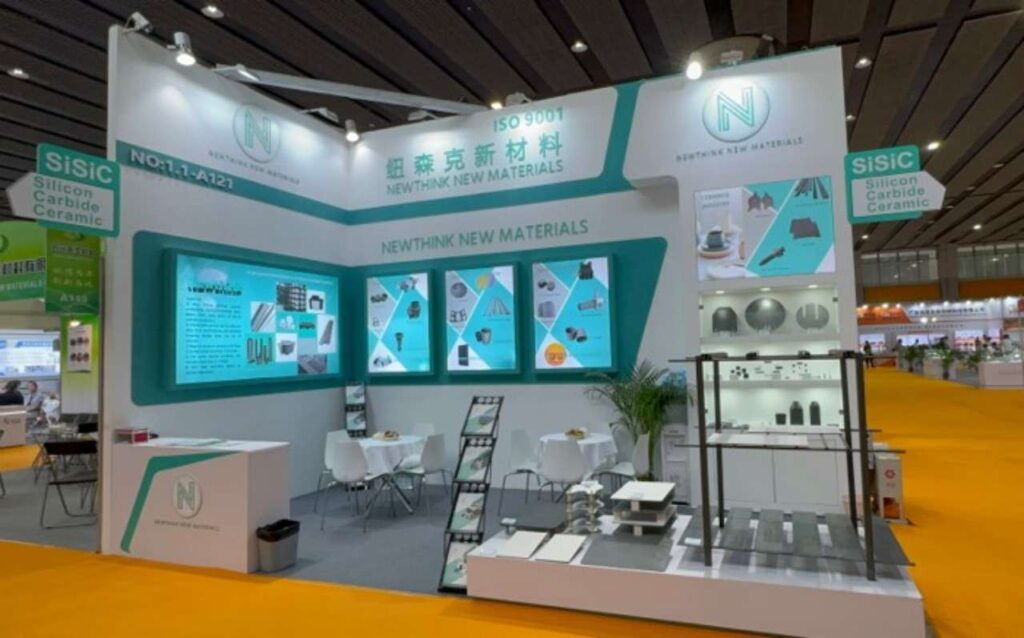
Several online resources make SiC information more accessible. ResearchGate allows you to contact authors directly for full papers. Materials Project offers open databases with detailed property data of SiC and related ceramics. In addition, many advanced ceramics companies share insights from their own R&D experiences. On their websites, you can often find case studies and product datasheets. Newthink New Materials integrates academic understanding and industrial expertise to provide customized solutions for customers worldwide.
It should be noted that whether you’re reading a paper or case study, it is important to think about the source and its possible bias.
How to Assess and Utilize the Information You Find?
Finding information is just the first half of the process. Determining whether or not to use the information is the real issue. After finding too many reports, journals and documents, you may get caught up in the details or rely on less credible material. Through investigating, you can separate information you needed from the other information, and convert it into workable knowledge.
1. Examine the credibility of the source.
Firstly, you need to know who authored the content. As usual, peer-reviewed articles offered in reputable journals tend to be more credible than others. They have been vetted by experts. If you find data that is published by companies, check for evidence that supports it. You may find tests that meets standards, ISO certifications or detailed charts from their pages. If it appears to be too broad, or the statements are vague, it’s best to check other published literature and evidence before using it.
2. Compare multiple studies and note consistencies.
SiC research varies by preparation method, purity and testing environment. When you find different studies reporting similar results, it may be a credible data. Creating a comparison sheet helps you see patterns and outliers. Over time, you can develop a clearer sense of what data can actually guide your design.
3. Pay Attention to the publication’s date and context.
In fast-developing fields like SiC semiconductors, information from ten years ago may no longer reflect current research. Check the publication year, see if newer studies reference or revise the older ones. This ensures your conclusions stay up to date.
4. Translate research data into business application.
If you’ve determined the credibility of a study, consider how its findings relate to your project. For example:
If supplier data show SiC ceramics outperform alumina in wear tests, that could justify a material switch in your procurement plan.
If new research improves sintering efficiency, it might help you estimate cost savings or production feasibility for scale-up.
You don’t need to be a researcher to make sense of technical information. You just need to connect it to your real goals. Whether you’re optimizing performance, improving efficiency or reducing costs, accurate SiC research can become a practical advantage when applied thoughtfully.
From Research to Products: SiC Ceramics in Practice
The transfer from research to application is when innovation takes place. Newthink New Materials’ 14 years of SiC ceramic are now commercialized into practical high-performance products used by engineers and manufacturers around the world.
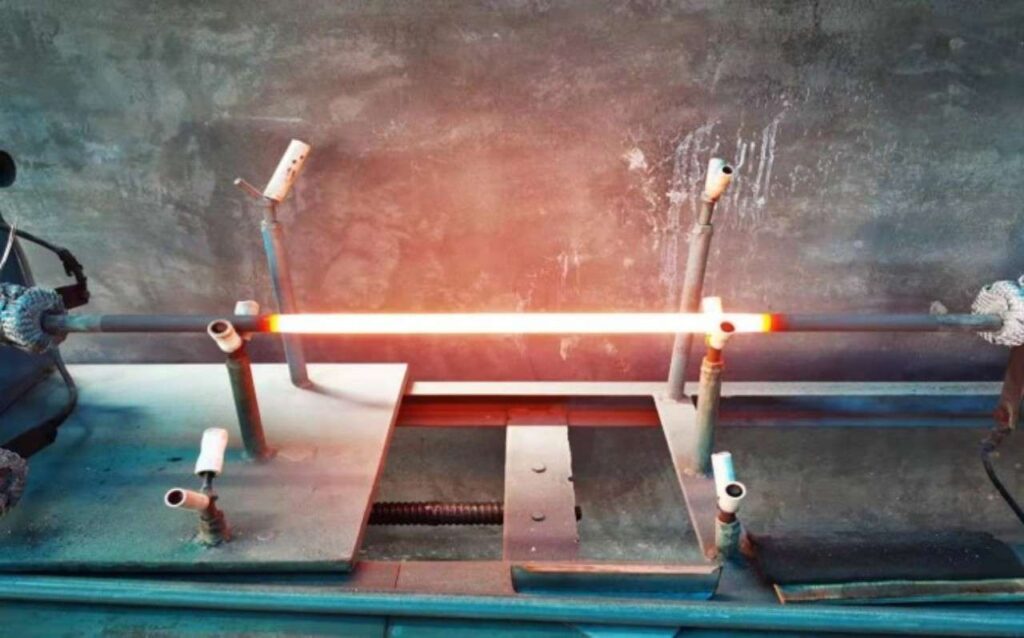
If your application involves high-temperature furnaces processing, SiC heating elements are good choice. They provide a clean and stable heat source with excellent energy efficiency. Operating temperatures can reach upwards of 1600℃, affording rapid heating, stable temperature, and precise temperature control.[1] These properties are important in applications like ceramics firing, powder metallurgy, or systems used for semiconductor diffusion. In all cases, SiC provides clean, efficient, and durable heat.
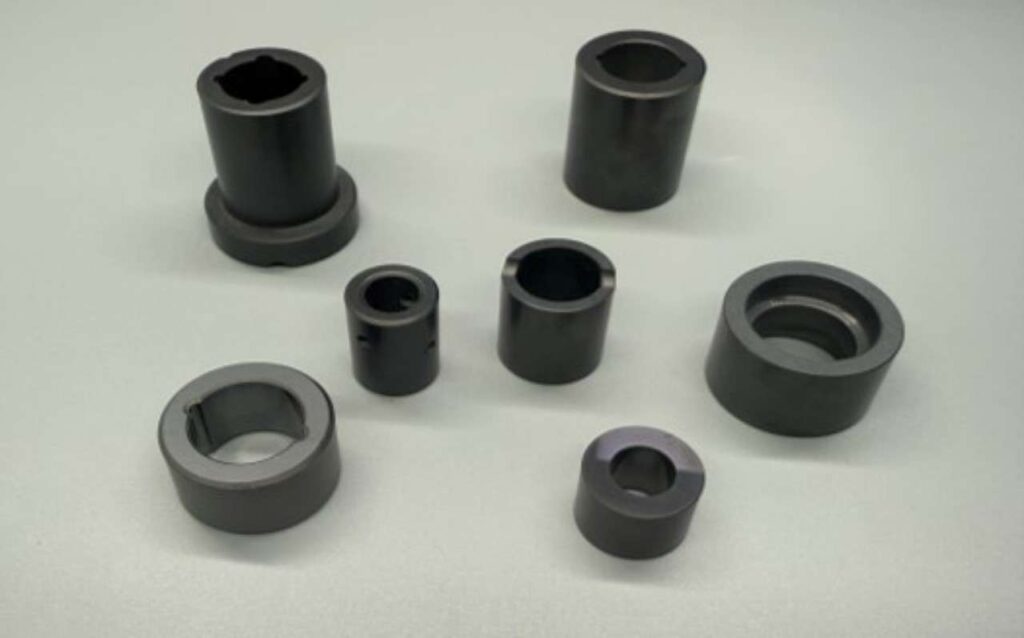
In tough applications like chemical pumps or slurry applications with metallurgical machinery, SiC bushings show significant wear and corrosion resistance, as well as temperature resistance. The SiC material used in chemical pumps or metallurgical machinery can provide mechanical protection as well as thermal stability. Compared to a metal or a quartz one, SiC bushing lasts longer and provides the same level of performance even after exposure to aggressive chemical or thermal conditions.[2]
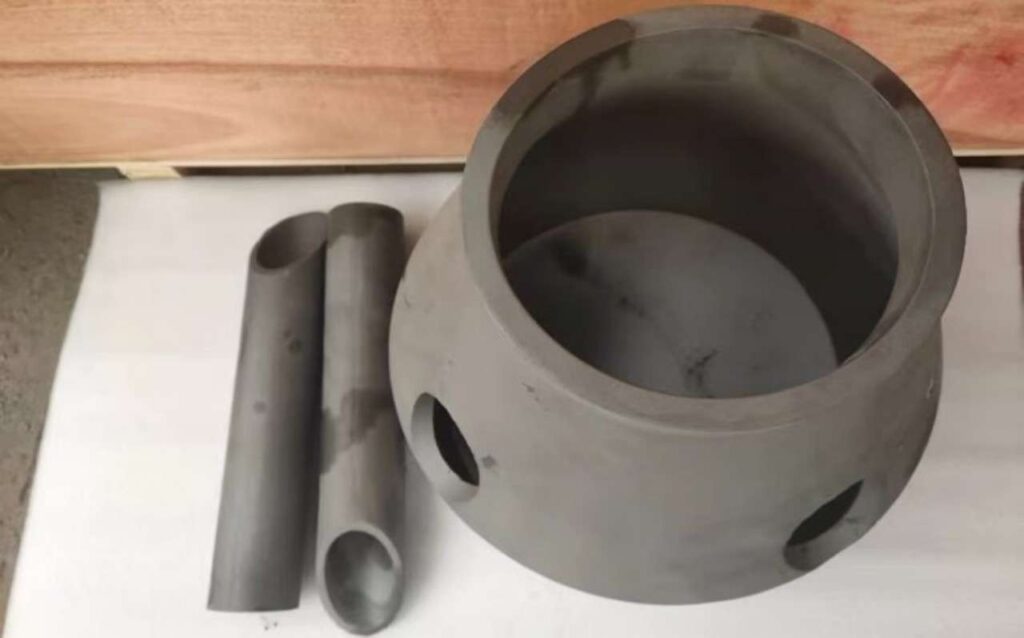
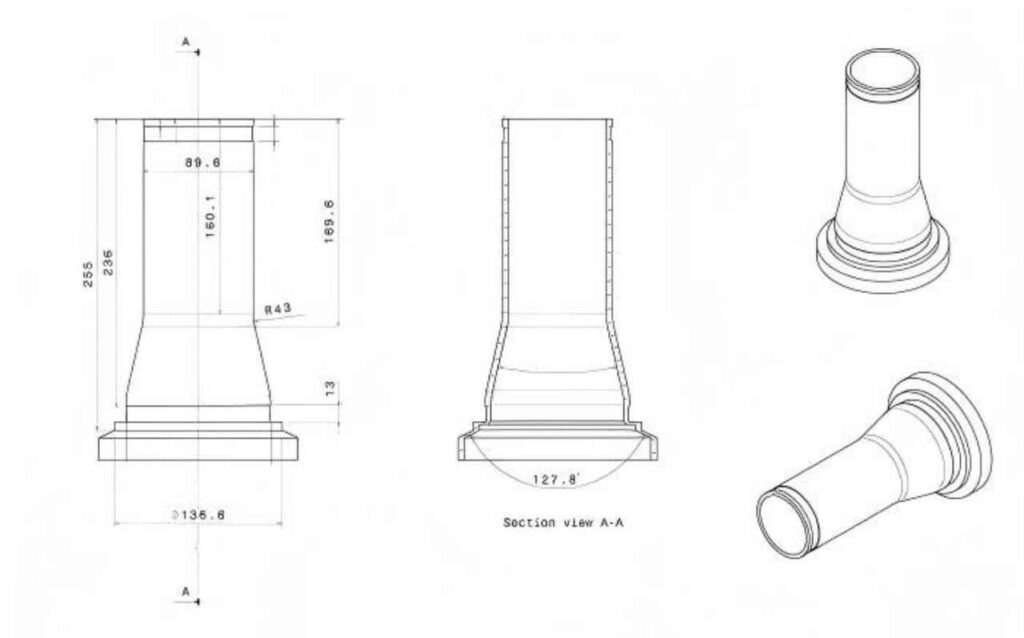
When your equipment faces abrasive or corrosive materials, SiC liners provide robust protection. With hardness second only to diamond and excellent thermal shock resistance, they are widely applied in mining, power generation, and chemical processing.[3] By protecting critical equipment surfaces, SiC liners can significantly lower long-term operational costs.
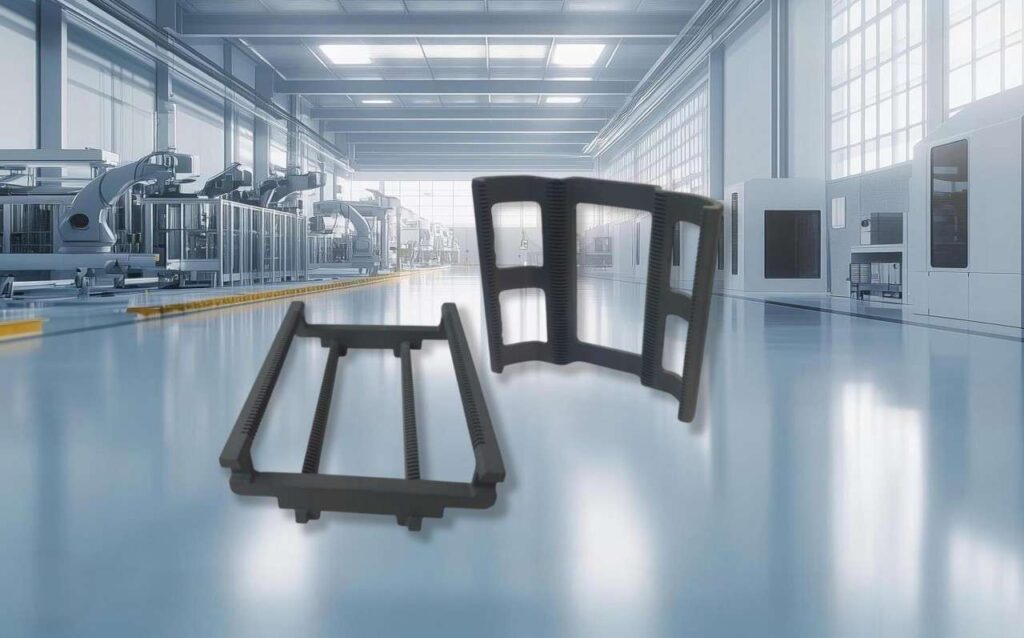
For high-precision environments like CVD and wafer processing, SiC boats are a superior alternative to quartz or graphite. It ensures uniform heating and minimal deformation during CVD processes. They can withstand continuous service above 1600℃ while maintaining dimensional precision. SiC boats are the preferred choice for advanced wafer production, extending lifespan longer than traditional alternatives.
Examples above show how SiC research has translated into reliable and high-performance products that solve industrial challenges. If you’re exploring customized SiC solutions, Newthink New Materials can help you connect cutting-edge research with your production goals. We are committed to deliver reliable, high-performance solutions to customers worldwide.
Conclusion
Silicon carbide has shifted from the lab to practical and dependable ceramics for the modern industrial sector. Knowing where to discover dependable information and what to do with that information will allow you to influence better decision-making in areas such as research, product design or purchasing.
Newthink New Materials operates in transitioning research on SiC into real-world performance for solutions in extremes of temperature, wear, and corrosion. If you find SiC ceramics to suit your next design application, please visit our homepage or contact our team for assistance.
Reference
- Pelissier, K., Chartier, T., & Laurent, J. M. (1998). Silicon carbide heating elements. Ceramics international, 24(5), 371-377.
- Harmon, L. (2002). Silicon carbide bushings help sealless pump prevent production losses. Materials & design, 23(6), 577-579.
- Locke, C., Severino, A., La Via, F., Reyes, M., Register, J., & Saddow, S. (2012). SiC Films and Coatings: Amorphous, Polycrystalline, and Single Crystal Forms. Silicon Carbide Biotechnology.