
If you are sourcing high-performance ceramics or hard materials for your production line, you may face a question: silicon carbide or diamond? Both of them have excellent hardness and thermal performance. However, they serve completely different purposes.
In this article, you will learn about their characteristics, performance and ideal applications. After reading, you will know which material suits your requirements perfectly.
What Makes Silicon Carbide a Reliable Industrial Workhorse?
Silicon carbide, as a versatile high-performance ceramic, has served industrial manufacturing for a long time. Its hardness and heat resistance are unmatched by few other materials.
Silicon Carbide Properties
Silicon carbide scores roughly 9~9.5 on the Mohs hardness scale. This places it well above most common engineering ceramics like alumina and tungsten carbide. Its structure creates sharp cutting edges and strong wear resistance for abrasive uses.
Beyond hardness, silicon carbide retains its mechanical strength at elevated temperatures. It performs stably at continuous operating temperatures up to 1,600℃ in inert environments. It also resists thermal shock and oxidation better than many ceramics.
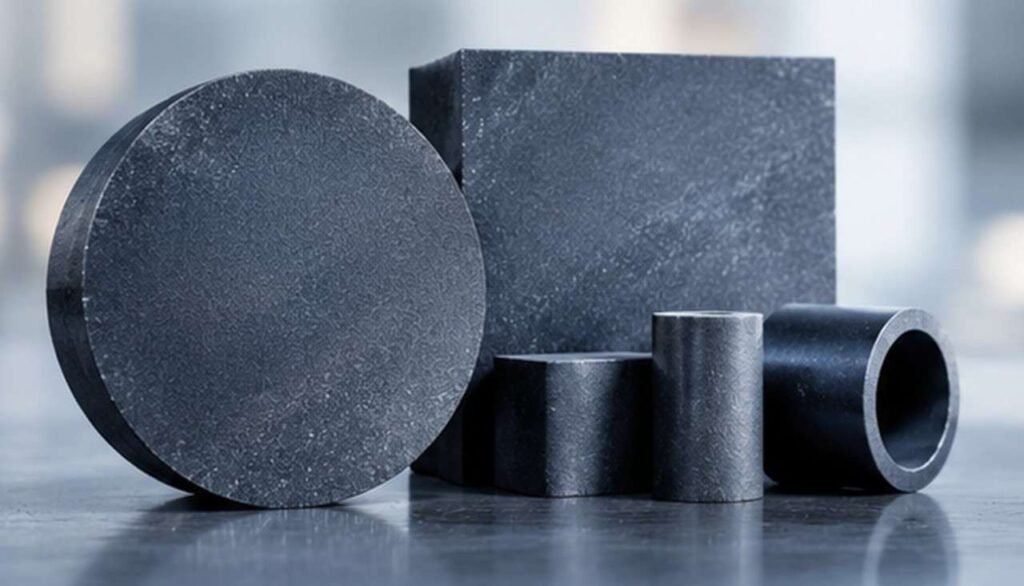
Advantages
Silicon carbide production relies on mature, scalable industrial processes. This means silicon carbide has stable pricing and shorter lead times for standard components.
You will find silicon carbide formed into tiles, tubes, nozzles, kiln furniture, grinding media, and semiconductor wafers. Its formability makes it suitable for large structural parts and also small precision components.
What Sets Diamond Apart as a Premium Superhard Solution?
Diamond sits at the top of the material hardness chart. It represents the highest-performance option for extreme cutting and wear applications. Most industrial diamond is synthetic, produced by high-pressure, high-temperature, or CVD methods.
Unmatched Hardness & Lifespan
With a Mohs hardness of 10, diamond is the hardest known industrial material. It cuts or grinds nearly every other engineering material without significant dulling. In continuous friction and cutting operations, diamond components usually last 3~5 times longer than the same silicon carbide parts.
This extended service life reduces replacement and machine downtime. For high-volume precision production lines, fewer tool changes will provide higher overall equipment effectiveness.
Characteristics
Diamond also holds the highest thermal conductivity of any bulk material. It can dissipate concentrated heat spots extremely fast, which is important for high-power electronics and high-speed machining.
As an electrical insulator, diamond also opens new opportunities in power semiconductor and radio frequency device development. Its dielectric strength and radiation hardness suit aerospace and extreme-environment electronics.
SiC vs. Diamond: Performance Comparison
To choose correctly, here is a comparison of these 2 materials that matter most to your process to tell you their differences in practice.
Hardness & Wear Resistance
Diamond wins outright on hardness and long-term wear life. It possesses the highest resistance to abrasion, scratching, and erosion of any solid material. If your application involves continuous contact with hard, abrasive workpieces, diamond delivers the longest service interval.
Silicon carbide, while softer than diamond, still outperforms most industrial ceramics and metals. It works well for medium-duty grinding, general wear protection, and applications where occasional dressing or replacement is acceptable. For many tasks, silicon carbide offers enough hardness with a much lower price.
High-Temperature Performance
Diamond offers far higher peak thermal conductivity, making it superior for rapid heat removal in high-power density systems. It pulls heat away from localized hot spots faster than any other material.
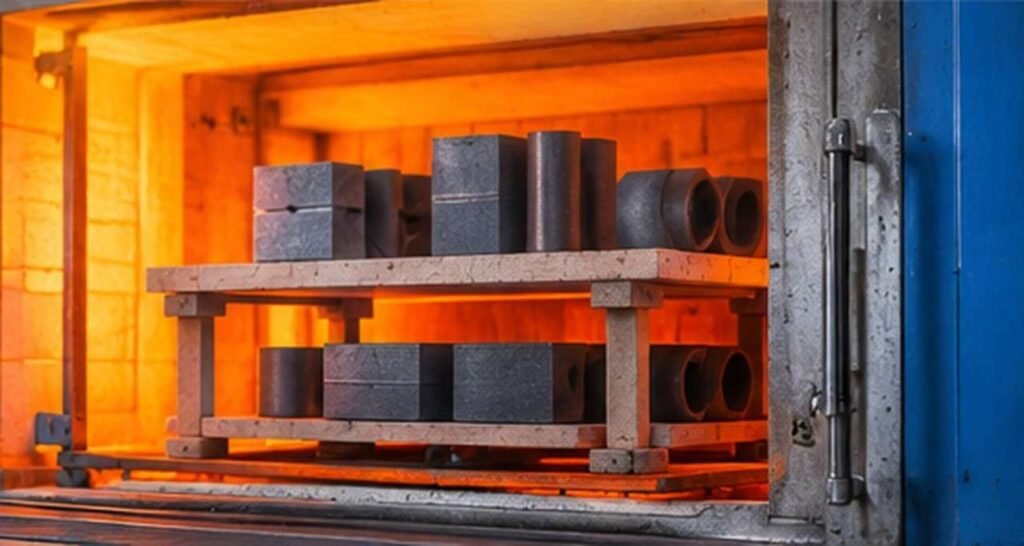
Silicon carbide, by contrast, wins on sustained high-temperature stability. It maintains full structure at temperatures where diamond begins to degrade. For furnace environments, kiln furniture, and continuous high-heat processes, silicon carbide is the clear choice.
Chemical Compatibility
Diamond, despite its strength, has a notable limitation: it reacts with iron-group metals at cutting temperatures. When machining steel and ferrous alloys, diamond tools experience rapid chemical wear. This restricts diamond to non-ferrous metals, ceramics, glass, stone, and composites.
Silicon carbide shows broader inertness across most common work materials. It works well with cast iron, non-ferrous metals, stone, rubber, and wood products. It also resists most acids and corrosive environments, safe for general abrasive and structural use.
Total Cost
Upfront purchase price favors silicon carbide by a wide margin. Standard silicon carbide components and abrasive products are readily available at moderate cost and fit most production budgets.
Diamond carries a much higher initial price tag. However, for high-volume, precision-focused operations, fewer tool changes, less downtime, and consistent quality often make diamond better over time.
Which Material Fits Your Application?
Let’s map them to common industrial use cases. Your operating conditions, workpiece material, and requirements will guide your final choice.
Abrasive & Grinding Wheel Applications
If you work with general stone cutting, cast iron grinding, or medium-duty surface finishing, silicon carbide grinding wheels deliver reliable performance at low cost. Green silicon carbide works especially well for cemented carbide and brittle ceramic rough grinding.
You will want diamond abrasives when you process extremely hard, brittle materials such as advanced ceramics, sapphire, optical glass, or semiconductor wafers. For fine-finish and ultra-precision grinding stations, diamond grit will hold its cutting profile far longer and produce more uniform results.
Cutting & Machining Tool Inserts
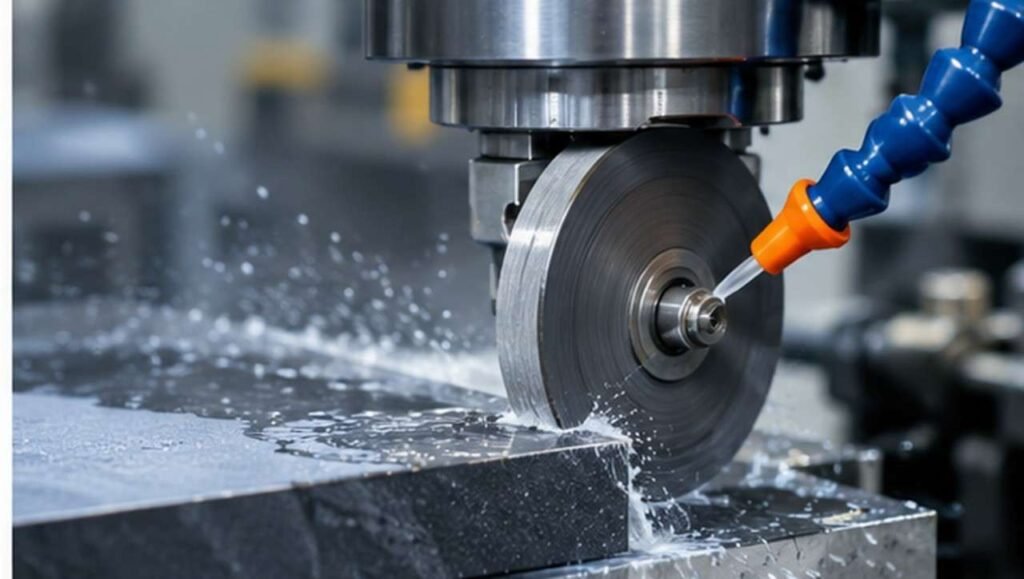
For general turning, milling, and sawing of non-ferrous metals, wood, and stone, silicon carbide tools and blades offer good value and acceptable wear life. They handle intermittent cuts and rough service conditions without big failure.
Choose polycrystalline diamond tooling when you machine aluminum alloys, carbon fiber composites, graphite, or advanced ceramics at high volume. You will see longer tool life, better surface finish, and faster feed rates.
Semiconductor Manufacturing & Thermal Management
Silicon carbide wafers and substrates are already mainstream in power electronics. They handle higher voltages, higher switching frequencies, and higher temperatures than silicon. For your medium-to-high power converter, inverter, and motor drive designs, they offer an established, supply-chain-stable solution.
Diamond substrates represent the next frontier for ultrahigh-power density electronics. Their extreme thermal conductivity lets you shrink heat sinks and pack more power into smaller packages. You will see diamond heat spreaders used in high-end RF amplifiers, laser diodes, and advanced power modules.
Structural & Wear-Resistant Components
For pump seals, nozzle liners, cyclone liners, and general wear plates exposed to sliding abrasion, silicon carbide is the standard workhorse. It handles most slurry and particle erosion situations at a reasonable cost and is easy to source in standard sizes.
You can upgrade to diamond coatings or diamond-tipped components when wear rates become high with silicon carbide. Extreme abrasive environments with fine, hard particles and high sliding velocities often justify the diamond premium.
FAQs
Can diamond tools be used to machine steel?
Not recommended. At cutting temperatures, carbon from diamond diffuses into iron, causing rapid chemical wear.
Is silicon carbide stronger than diamond?
No. Diamond is harder and stiffer than silicon carbide. Silicon carbide, however, offers better high-temperature oxidation resistance and lower cost, so it is stronger in certain environments.
How long do diamond grinding wheels last compared to SiC wheels?
Diamond wheels typically last several times longer than silicon carbide equivalents in comparable applications.
Can silicon carbide be used for heat sinks?
Yes. Its thermal conductivity is much higher than aluminum oxide, though not as high as diamond. It is a cost-effective choice for medium-power devices.
Is all industrial diamond synthetic?
Nearly all. Natural diamond is rare and expensive, and reserved mostly for specialty gem and very high-end technical applications.
Will diamond replace silicon carbide in power electronics?
Not in the near term. Silicon carbide is already commercialized, scalable, and cost-competitive. Diamond semiconductors show great theoretical promise but remain expensive and limited in wafer size.
Conclusion
Silicon carbide delivers proven performance with stable supply and approachable pricing. Diamond returns value through longer life, less downtime, and higher quality output.
Before you make a purchase, match your choice to your actual workpiece, operating temperature, production volume, and quality targets. Newthink New Materials helps you with high-quality silicon carbide products. Contact us for more information.