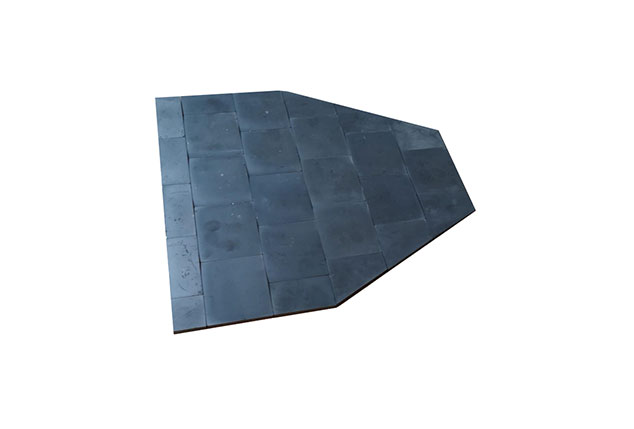
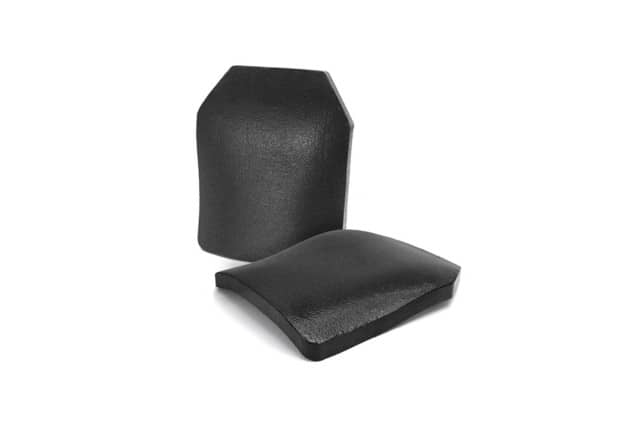
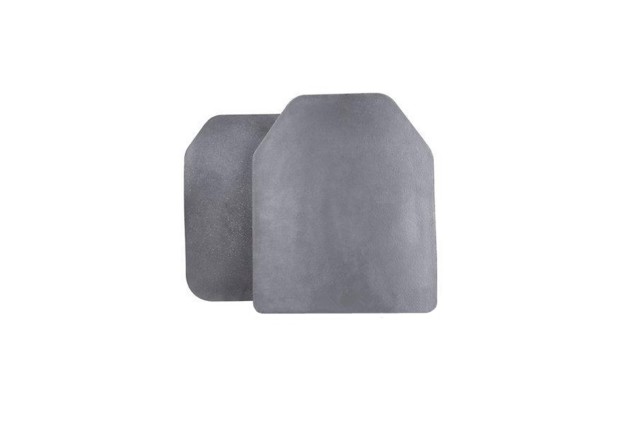
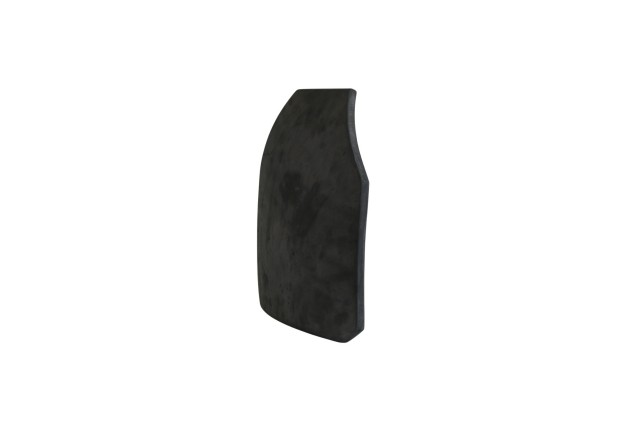
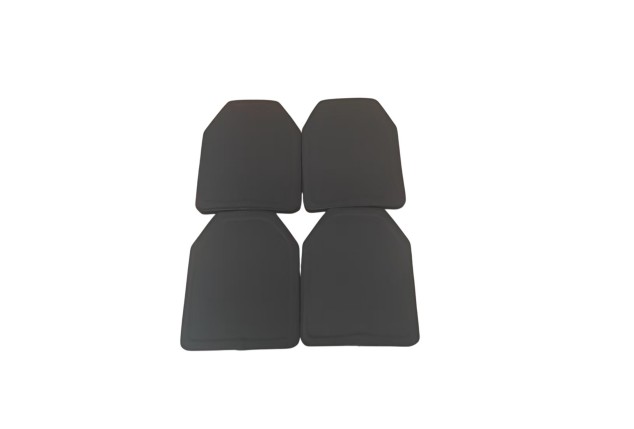
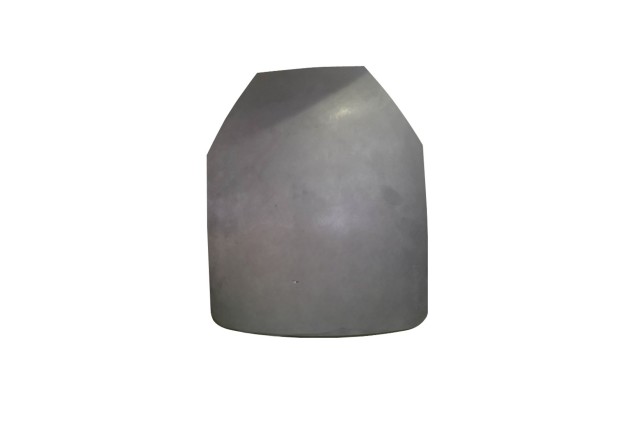
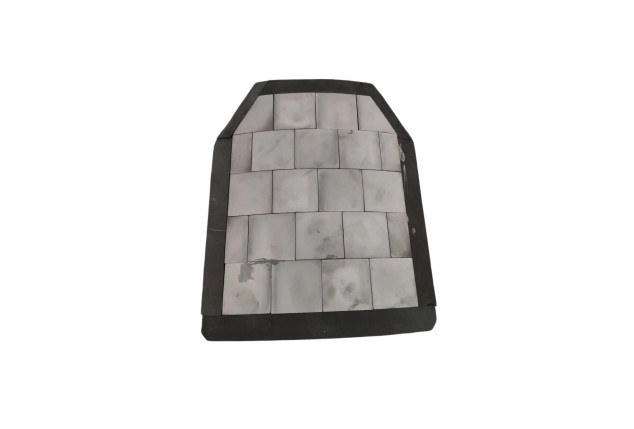
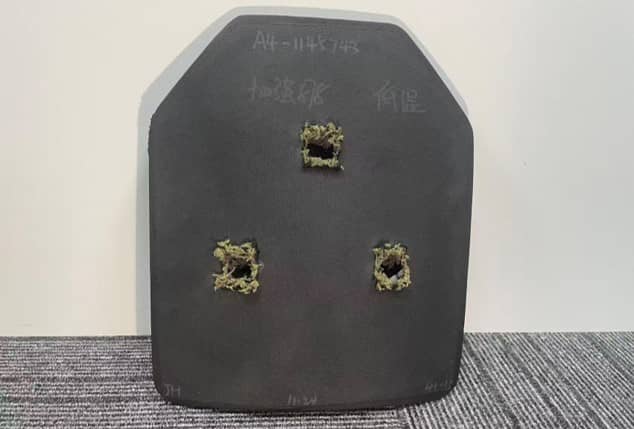
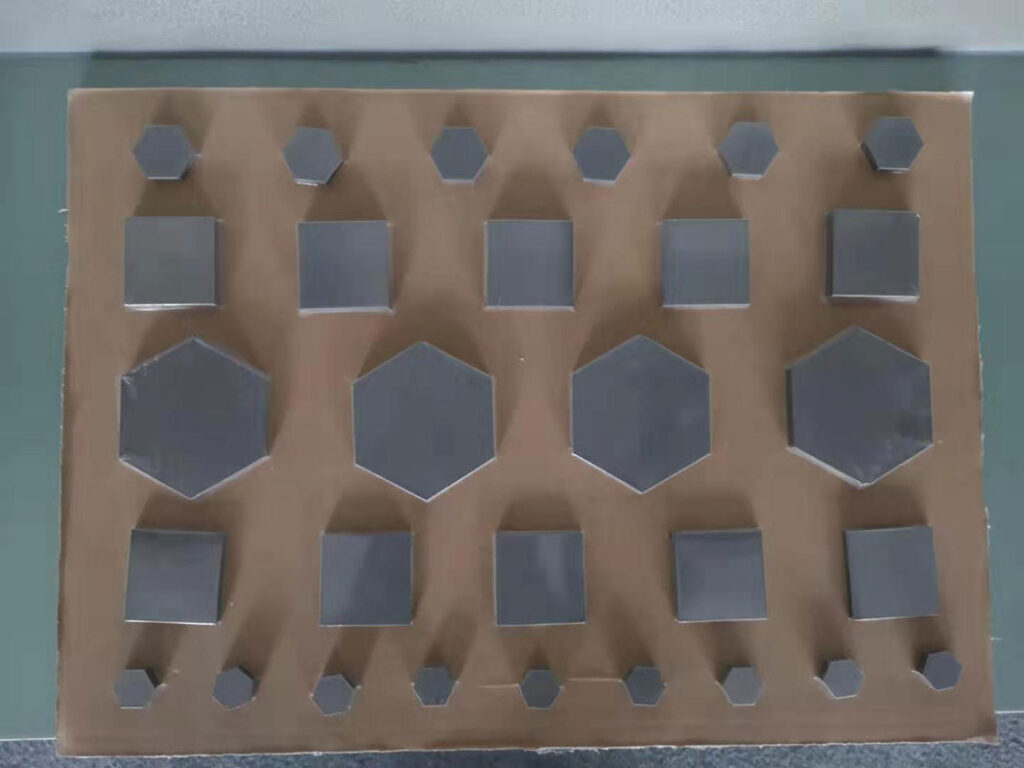
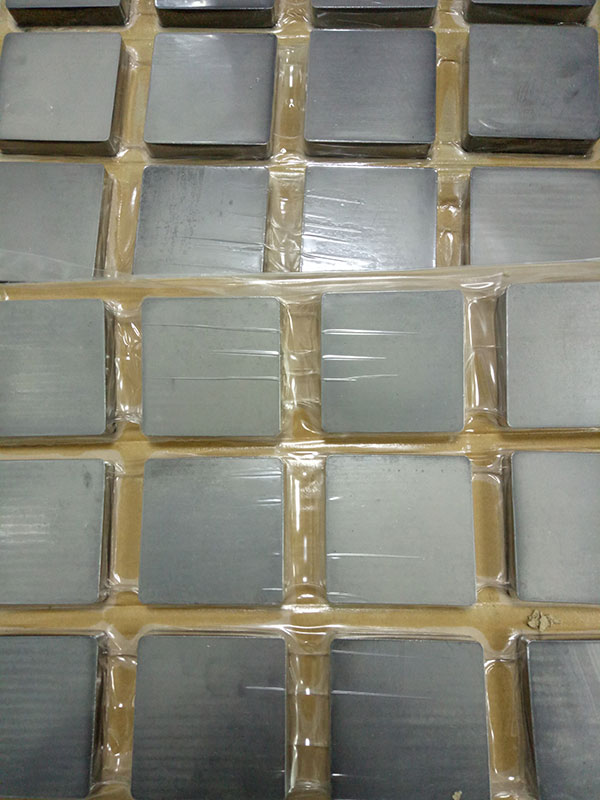
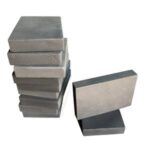
[Introduction]: Silicon carbide armor is known for being highly resistant to bullets relative to other ceramics such as alumina. Its strength combined with a light weight ensures that it is a highly suitable material in situations where light weight and resistance are vital. The material is able to withstand extremely fast projectiles, especially those at NIJ Level III and above. Besides personal protection systems, silicon carbide armor can be employed in structural protection applications for military equipment like ground and air vehicles. It is very flexible in terms of its manufacturing and design capabilities because it can be produced in different forms and sizes in order to offer effective protection under varying circumstances.
[Size]: 100x100x20mm 220x270x5.2mm 240x290x9mm 250x300x10mm 250x300x22mm Dimensions can be customized
Our silicon carbide armor possesses a high density up to 3.13–3.15 g/cm³.
Its hardness between 2479 and 3099 HV, providing excellent instantaneous impact resistance.
Flexural strength can reach 396.22–512.35 MPa, ensuring strong structural reliability under stress.
With five 3000-ton forming presses, we deliver fast production cycles and a monthly supply capacity > 10,000 pieces.
Silicon carbide material offers outstanding multi-hit performance, maintaining protection under repeated impacts.
Product Application
Silicon carbide armor is extensively used in protection systems in the military due to its characteristics of high hardness, low density, and good ballistic property. Because of such features, silicon carbide armor is capable of offering sufficient protection without being excessively heavy.
The versatility of silicon carbide armor makes it suitable for use in both military and civil purposes. It finds applications in many systems, such as armored cars, ships, and secure cabinets. It is also extensively used in cash transfer vans and other civil security systems requiring ballistic resistance.
Our Packing
The two packing methods we use are plywood box packing and solid wood packing, with the solid wood box requires a fumigation certificate. Depending on the various products, we will tailor the proper packaging box; Plastic foam measuring 2 cm to 3 cm thick is placed within the box and secured with row nails. To maintain the products safety during shipment, packing tape is typically used.
Related Products
The silicon carbide grinding barrel is a new type of ceramic product. Features of silicon carbide grinding barrel:
Lightweight and high-cost performance.
Good heat dissipation, the thermal conductivity of 130W/M.K (20°C)
High hardness, better impact resistance, erosion resistance and wear resistance than traditional wear-resistant ceramics such as alumina and zirconia.
The service life is 5 to 10 times that of general wear-resistant materials, the overall operating cost is low, and the cost performance is high.
Heating Element
Burner Nozzle
Bushing
Wear Resistant Plate
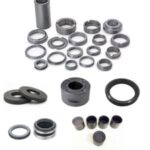
Seal Ring
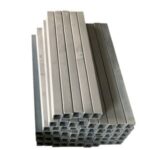
Beam
error: Content is protected !!
Get an instant quote from our most experienced consultants.